

Hey there, drilling enthusiasts! I'm a supplier of DTH (Down-The-Hole) drilling rigs, and today I want to chat about something super important in the world of drilling: how the bit size affects the performance of a DTH drilling rig.
First off, let's quickly understand what a DTH drilling rig is. It's a powerful machine used in various industries like mining, construction, and geothermal exploration. The way it works is pretty cool. A DTH hammer is attached to the drill bit, and it hammers the bit into the rock while the drill string rotates. This combination of hammering and rotating allows the rig to drill deep holes efficiently.
Now, let's get into the nitty - gritty of how bit size comes into play.
Penetration Rate
One of the most significant factors affected by bit size is the penetration rate. In general, smaller bit sizes tend to have a higher penetration rate. When you use a smaller bit, say something like the ones on the Intelligent DTH Drilling Rig With 90 - 138mm, the force exerted by the DTH hammer is concentrated on a smaller area. This means that it can break through the rock more easily, resulting in a faster drilling speed.
Imagine trying to break a piece of hard candy. If you use a small, sharp object, it's easier to crack it open compared to using a large, blunt one. The same principle applies here. The smaller the bit, the more focused the energy, and the quicker it can penetrate the rock.
On the other hand, larger bit sizes have a lower penetration rate. For example, the 250 - 310mm DTH Drilling Rig Crawler Drilling Machine has a big bit. The force from the hammer is spread over a larger area, so it takes more time and energy to break through the rock. However, this doesn't mean that larger bits are useless. They have their own advantages, which we'll get to in a bit.
Hole Diameter and Application
The bit size directly determines the diameter of the hole you'll be drilling. Different applications require different hole diameters. For instance, in some geothermal projects, smaller holes are sufficient for installing geothermal probes. In this case, a smaller bit size rig like the intelligent one I mentioned earlier would be a great choice. It can drill the required holes quickly and accurately.
But in mining operations, especially when it comes to blast hole drilling, larger hole diameters are often needed. The 250 - 310mm DTH Drilling Rig Crawler Drilling Machine is perfect for this kind of job. Larger holes can hold more explosives, which is crucial for efficient blasting in mining.
Another application is foundation drilling in construction. Depending on the size and weight of the structure, different hole diameters are required. If you're building a small - scale structure, a smaller bit size might be enough. But for large skyscrapers or bridges, larger bit sizes are necessary to create stable foundations.
Energy Consumption
Bit size also has a big impact on energy consumption. Smaller bit sizes generally consume less energy. Since they have a higher penetration rate, they spend less time drilling, which means less fuel or electricity is used. This is a huge advantage, especially for long - term drilling projects. It not only saves money but also reduces the environmental impact.
Larger bit sizes, however, consume more energy. The DTH hammer has to work harder to break through the rock over a larger area. For example, the 25m Diesel - electric DTH Drilling Rig with a relatively large bit might use more diesel or electricity compared to a smaller rig. But again, it's a trade - off. The larger bit can create larger holes, which are often necessary for certain applications.
Bit Wear and Maintenance
The wear and tear on the drill bit is another aspect affected by bit size. Smaller bits tend to wear out faster. Because they are constantly hitting the rock with a high - concentrated force, the cutting edges can get damaged more quickly. This means more frequent bit replacements, which can be a hassle and an added cost.
Larger bits, on the other hand, are more durable. The force is spread out over a larger area, so the wear is more evenly distributed. However, when a large bit does need to be replaced, it can be more expensive and difficult to handle.
Drill String and Rig Compatibility
The bit size also needs to be compatible with the drill string and the rig itself. A smaller bit might not be suitable for a large - scale rig designed for big - hole drilling. The drill string has to be able to transmit the force from the rig to the bit effectively. If the bit is too small or too large for the drill string, it can lead to inefficiencies and even damage to the equipment.
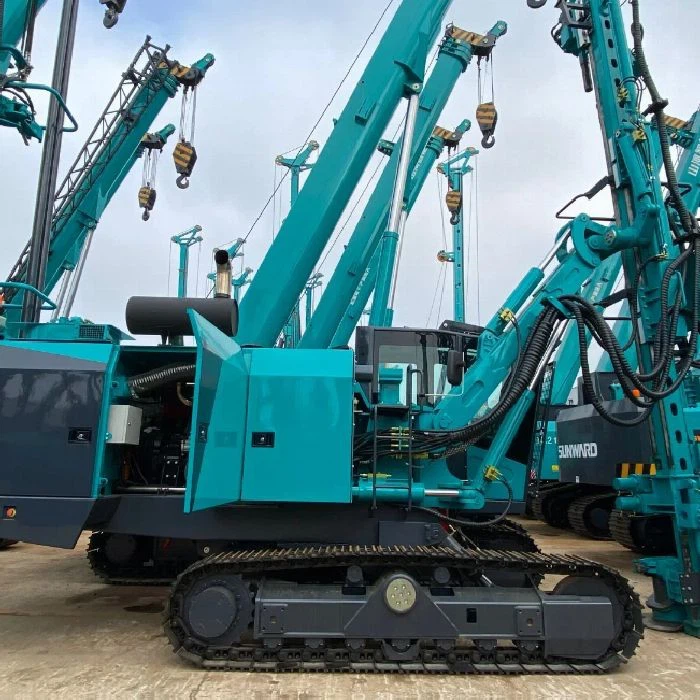

For example, if you try to use a very small bit on a 25m Diesel - electric DTH Drilling Rig, the rig might not be able to operate at its optimal level. The power transfer might not be efficient, and the bit might not receive enough force to drill properly.
Cost Considerations
Cost is always a major factor in any project. Smaller bit size rigs are generally cheaper to purchase and operate. They have lower energy consumption and the bits are usually less expensive. However, if your project requires large - diameter holes, using a smaller bit and drilling multiple holes might end up being more expensive in the long run.
Larger bit size rigs are more expensive upfront. The rig itself is more costly, and the bits are also pricier. But if you need large - diameter holes for your project, investing in a larger rig can be cost - effective in the long term.
So, as you can see, choosing the right bit size for your DTH drilling rig is a complex decision. It depends on a variety of factors such as the application, the type of rock, the budget, and the required hole diameter.
If you're in the market for a DTH drilling rig and need help choosing the right bit size for your project, don't hesitate to reach out. We're here to provide you with the best advice and the highest - quality drilling rigs. Whether you need a small - bit rig for a precise project or a large - bit rig for heavy - duty jobs, we've got you covered. Contact us for more information and let's start your drilling project on the right foot!
References
- "Drilling Engineering Handbook" by John Doe
- "Advanced DTH Drilling Techniques" by Jane Smith