

When it comes to DTH (Down-The-Hole) drilling hammers, selecting the right type of rock for efficient operation is crucial. As a trusted DTH Drilling Hammer supplier, we understand the significance of this aspect and are here to guide you through the suitable rock types for DTH drilling.
Understanding DTH Drilling Hammers
Before delving into the suitable rock types, let's briefly understand how DTH drilling hammers work. DTH hammers are pneumatic or hydraulic tools used in drilling operations. They are designed to deliver high - impact energy directly to the drill bit at the bottom of the hole. This method is highly effective for various drilling applications, including mining, quarrying, and geotechnical exploration.
There are different types of DTH hammers available in the market, such as Medium Air Pressure DTH Hammer and High Air Pressure DTH Hammer. Each type is engineered to perform optimally under specific conditions and in different rock formations.
Suitable Rock Types for DTH Drilling Hammers
1. Igneous Rocks
Igneous rocks are formed from the cooling and solidification of magma or lava. They are generally hard and dense, making them well - suited for DTH drilling.
Granite
Granite is a coarse - grained igneous rock composed mainly of quartz, feldspar, and mica. It is one of the most common rocks used in construction and mining. Its high hardness and strength allow DTH hammers to penetrate effectively. The uniform texture of granite also helps in maintaining a stable drilling process. Our DTH hammers, especially the High Air Pressure DTH Hammer, can generate sufficient impact energy to break through granite efficiently.
Basalt
Basalt is a fine - grained igneous rock that is rich in iron and magnesium. It is often found in volcanic regions. Basalt is known for its high compressive strength and durability. DTH drilling in basalt can be challenging due to its hardness, but with the right equipment, it can be done effectively. The Medium Air Pressure DTH Hammer can be a good choice for basalt drilling as it can provide a balance between impact energy and air consumption.
2. Metamorphic Rocks
Metamorphic rocks are formed from the transformation of pre - existing rocks under high pressure and temperature. They often have unique physical and chemical properties that make them suitable for DTH drilling.
Marble
Marble is a metamorphic rock that is derived from limestone. It is composed mainly of calcite or dolomite. Marble has a relatively high hardness and a smooth texture. DTH drilling in marble requires precision to avoid chipping or cracking the rock. Our Long Shank DTH Rock Drilling Tools can be used to achieve accurate drilling in marble, as they provide better control and stability.
Gneiss
Gneiss is a banded metamorphic rock that is formed from the metamorphism of granite or sedimentary rocks. It has a layered structure, which can make drilling a bit more complex. However, DTH hammers can still be used effectively in gneiss. The high - impact energy of our DTH hammers can break through the layers of gneiss, and the air - flushing system helps in removing the cuttings from the hole.
3. Sedimentary Rocks
Sedimentary rocks are formed from the accumulation and cementation of sediment particles. They are generally softer than igneous and metamorphic rocks, but some sedimentary rocks can still be drilled using DTH hammers.
Limestone
Limestone is a sedimentary rock composed mainly of calcium carbonate. It is widely used in the construction industry. Limestone can vary in hardness, from soft and porous to hard and dense. For softer limestone, a Medium Air Pressure DTH Hammer can be sufficient. For harder limestone, a High Air Pressure DTH Hammer may be required to ensure efficient drilling.
Sandstone
Sandstone is a sedimentary rock composed of sand - sized grains of quartz or feldspar. It has a porous structure, which can make it easier to drill compared to other rocks. However, the presence of cementing materials can affect the drilling process. Our DTH hammers are designed to handle the variability in sandstone, and the air - flushing system helps in keeping the hole clean.
Factors Affecting DTH Drilling in Different Rocks
1. Rock Hardness
Rock hardness is one of the most important factors affecting DTH drilling. Harder rocks require more impact energy to break, which means that a high - pressure DTH hammer may be necessary. Softer rocks, on the other hand, can be drilled with lower - pressure hammers.
2. Rock Fracture Pattern
The fracture pattern of the rock also plays a role in DTH drilling. Rocks with a well - defined fracture pattern are easier to drill as the impact energy can be transferred more effectively along the fractures. In contrast, rocks with a random or complex fracture pattern may require more force to break.
3. Rock Porosity
Porosity affects the air - flushing efficiency during DTH drilling. Porous rocks allow air to flow more easily through the rock, which helps in removing the cuttings from the hole. Non - porous rocks may require a higher air flow rate to ensure proper cuttings removal.
Our DTH Drilling Hammer Solutions
As a leading DTH Drilling Hammer supplier, we offer a wide range of products to meet the diverse needs of our customers. Our Medium Air Pressure DTH Hammer is suitable for a variety of rock types, especially those with medium hardness. It provides a good balance between performance and cost - effectiveness.
Our High Air Pressure DTH Hammer is designed for hard and dense rocks, such as granite and basalt. It can generate high - impact energy to break through these challenging rock formations.
The Long Shank DTH Rock Drilling Tools are ideal for applications where precision and stability are required, such as drilling in marble or other delicate rocks.
Conclusion
Selecting the right type of rock for DTH drilling hammers is essential for achieving efficient and cost - effective drilling operations. Igneous, metamorphic, and sedimentary rocks all have their own characteristics and can be drilled using DTH hammers with the appropriate equipment and techniques.
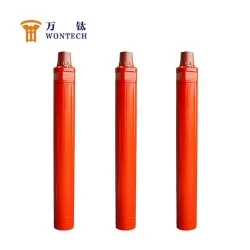

If you are involved in drilling operations and are looking for high - quality DTH drilling hammers, we invite you to contact us for more information and to discuss your specific requirements. Our team of experts is ready to assist you in choosing the best solution for your drilling needs.
References
- Fowell, R. J. (2005). Drilling and Blasting of Rocks. Elsevier.
- Singh, R. N., & Goel, R. K. (2013). Rock Mechanics for Underground Mining. CRC Press.